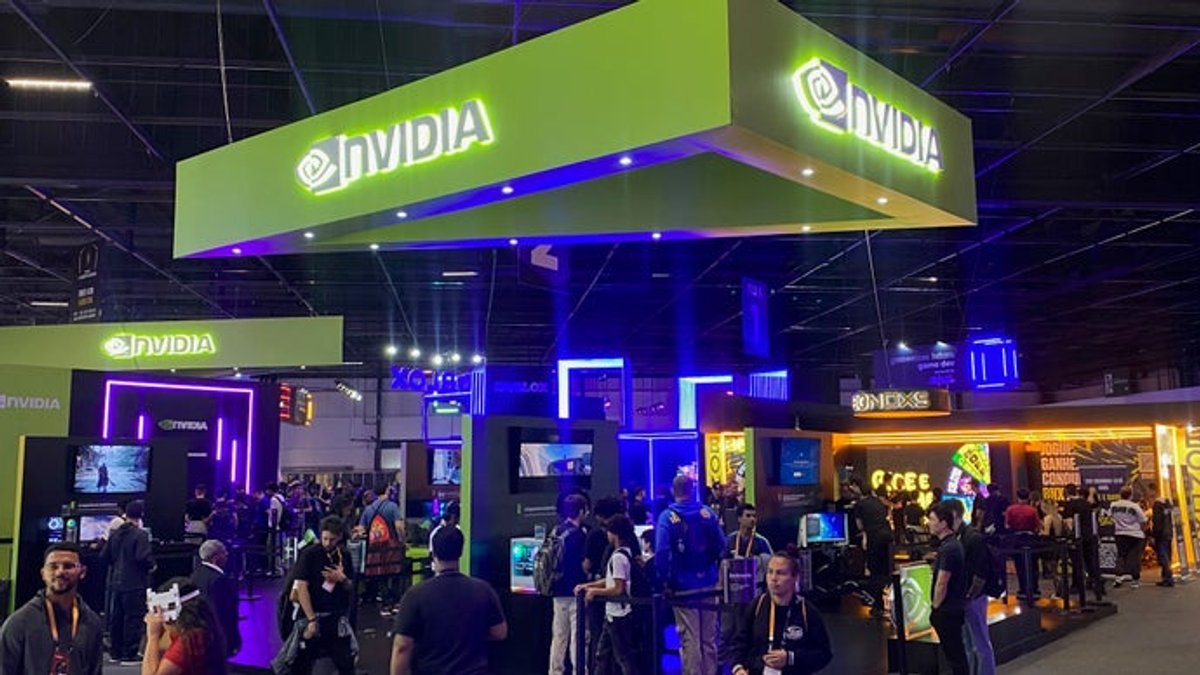
A Leap Forward in Rendering and Performance
One of the headline announcements was the introduction of ray-traced Nanite, a significant evolution of Unreal Engine's virtualized geometry system. This new feature promises to bring real-time ray tracing to Nanite's highly detailed meshes, allowing developers to achieve cinematic lighting and reflections without sacrificing geometric complexity. By integrating ray tracing directly into the Nanite pipeline, Nvidia aims to bridge the gap between pre-rendered visuals and real-time graphics, a move that could redefine visual standards in upcoming AAA titles.
In parallel, Nvidia revealed native anti-cheat integration within its driver-level technologies. This development is designed to bolster security in competitive multiplayer games by allowing anti-cheat systems to operate more deeply within the graphics stack. The integration is expected to reduce cheating incidents and streamline the enforcement process, providing a more level playing field for gamers. While specifics on the implementation remain under wraps, the industry sees this as a proactive step toward addressing one of gaming's most persistent challenges.
DLSS 4.5 also made its debut, building on the success of previous iterations. The new version introduces enhanced AI upscaling algorithms and improved frame generation, delivering higher frame rates and crisper visuals even on mid-range hardware. Nvidia emphasized that DLSS 4.5 is not merely a performance booster but a tool for developers to push creative boundaries, enabling more ambitious game worlds without compromising on smoothness.
Beyond these core updates, Nvidia touched on GeForce Now, its cloud gaming service. While details were sparse, the company hinted at expanded library support and improved streaming quality, aligning with its broader strategy to make high-end gaming accessible across devices. The announcements collectively signal Nvidia's intent to remain at the forefront of gaming technology, catering to both developers pushing the limits of realism and players seeking seamless experiences.
As Gamescom 2026 continues, the industry will be watching closely for further details, particularly around the rollout timeline for these features and which studios will adopt them first. For now, Nvidia has set a clear direction: prioritize developer tools, enhance security, and refine the cloud gaming experience to keep pace with an evolving market.

Comments
No comments yet.