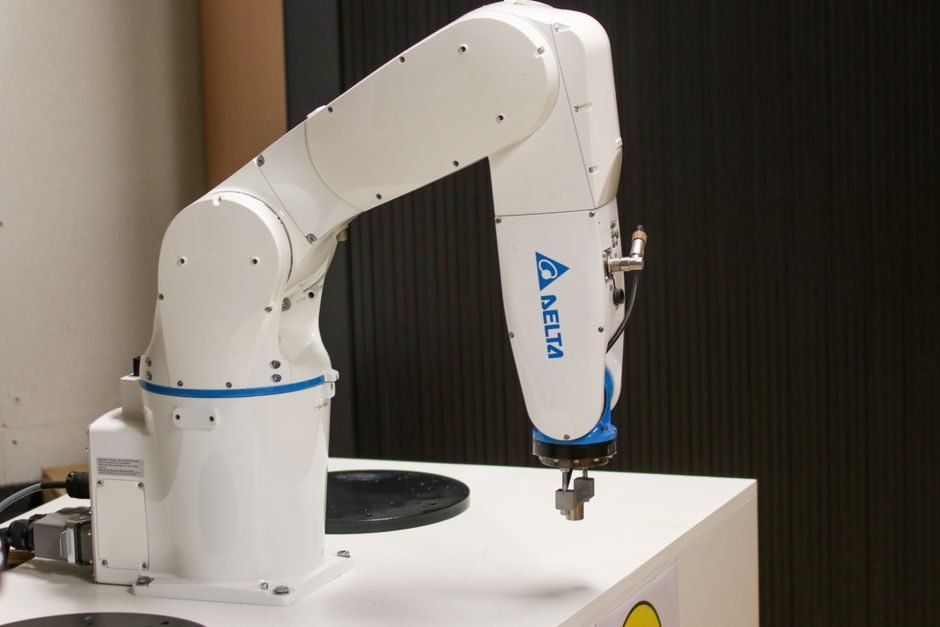
A new chapter in satellite operations is unfolding as Northrop Grumman's Mission Robotic Vehicle makes its first attempt to attach a fresh thruster to a satellite that has been in service for years. This mission represents a significant departure from the long-standing practice of decommissioning aging spacecraft and replacing them with costly new ones. Instead, the robotic vehicle is designed to perform delicate repairs and upgrades directly in orbit, effectively giving satellites a second life.
The concept of in-space servicing has been discussed for decades, but only recently have the technologies and business models matured enough to make it practical. The Mission Robotic Vehicle is at the forefront of this shift, equipped with advanced sensors, robotic arms, and autonomous navigation systems. Its primary objective is to dock with a target satellite, assess its condition, and then install a new propulsion module that can extend the satellite's operational life by several years.
## A New Era for Satellite Maintenance
Satellites are critical infrastructure for global communications, navigation, weather monitoring, and scientific research. Traditionally, when a satellite runs low on fuel or experiences a component failure, it is either left to drift in a graveyard orbit or deorbited to burn up in the atmosphere. Both options are wasteful, both in terms of the initial investment and the operational capacity lost. The ability to service satellites in orbit changes this calculus entirely.
The thruster attachment mission is a proof of concept that could pave the way for a broader range of services, including refueling, component replacement, and even full-scale assembly of large structures in space. For commercial satellite operators, this means reduced downtime, lower replacement costs, and more predictable fleet management. For government agencies, it offers the potential to maintain critical national security assets without the need for costly and risky replacement launches.
The success of this mission will hinge on the robotic vehicle's ability to perform precise maneuvers and execute complex tasks in the harsh environment of space. The stakes are high, but the potential rewards are even higher. If the Mission Robotic Vehicle proves its capabilities, it could fundamentally change how the industry thinks about satellite lifecycle management.
As the mission unfolds, the world will be watching closely. The outcome will not only determine the fate of one aging satellite but also signal whether in-space servicing is ready to become a mainstream part of space operations. If successful, this could be the beginning of a new era in which satellites are maintained, upgraded, and kept productive for far longer than ever before.
Northrop's Robotic Satellite Mechanic Aims to Extend Orbital Lifespans
Ad Space
TechnoVibes Opinion
This mission is a bold bet on the future of space infrastructure. If Northrop succeeds, it will not only extend the life of a single satellite but also validate an entire industry model built around in-space servicing. The key risk is technical failure, but the opportunity is enormous: a thriving market for orbital maintenance could reduce space debris and make satellite operations far more sustainable. The next few months will tell us whether we are witnessing a turning point or just an ambitious experiment.
Original source: https://techcrunch.com/2026/08/12/northrops-robot-space-mechanic-is-a-new-way-to-keep-satellites-at-work-longer/

Comments
No comments yet.