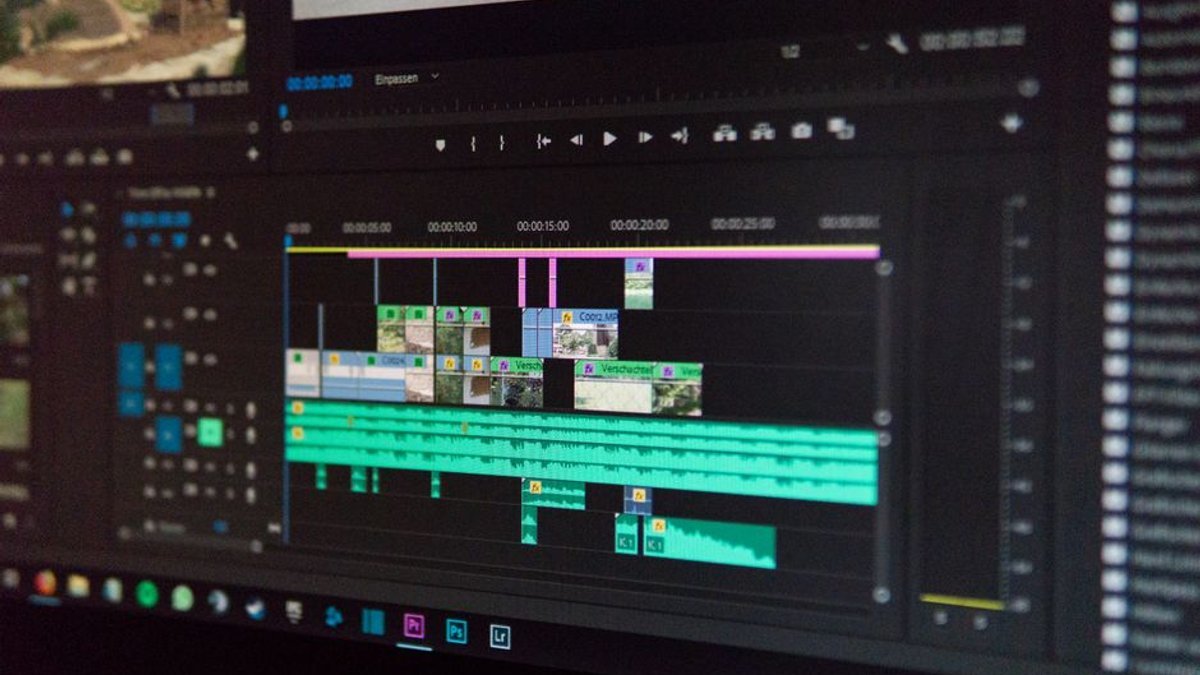
Motion design has long been the preserve of artists who spend hours keyframing every transition. Claude Opus 5.5 is quietly rewriting that assumption. According to coverage from Pasquale Pillitteri, the model produces motion design videos not by rendering pixels directly but by writing a program that draws each individual frame, turning a creative brief into executable animation code.
A Programmatic Route to Animation
The distinction matters. Instead of predicting video frames the way a diffusion model would, Opus 5.5 reasons about geometry, timing and easing curves, then emits code that a rendering engine executes. That approach gives editors a readable, editable artifact rather than an opaque clip, which is exactly the kind of control professional motion teams have been asking for since generative video first appeared.
Early demonstrations circulating on social platforms show the model handling AI video and music creation tasks in a single workflow, suggesting Anthropic is positioning Opus 5.5 as a general creative engine rather than a narrow video tool. The same reasoning stack that writes animation code can coordinate audio cues, which shortens the distance between a concept and a finished sequence.
Qwen3.8-27B Narrows the Gap on a 4090
The competitive picture is shifting fast. Startup Fortune reports that Alibaba's Qwen3.8-27B nearly matches Claude Opus 5.5 on motion graphics benchmarks while running on a single Nvidia RTX 4090. That is a striking result: a 27-billion-parameter open model operating on consumer hardware and landing within striking distance of a frontier system.
For studios, the implication is cost. A 4090 workstation costs a fraction of a rented cluster, and local inference removes per-token billing from the equation entirely. The trade-off is still quality and consistency on complex scenes, but the margin is thin enough that many production pipelines will soon test both.
Sonnet 5.5 Leak Points to a Second Checkpoint
Meanwhile, a leak reported by Pasquale Pillitteri claims Claude Sonnet 5.5 already has a second checkpoint in testing. If accurate, it signals that Anthropic is iterating on the mid-tier model in parallel with Opus, likely to keep latency and price competitive against open-weight rivals.
Taken together, these threads describe a market where frontier video generation, open-weight challengers and rapid internal iteration are converging on the same release window. Watching how Opus 5.5, Qwen3.8-27B and Sonnet 5.5 land in the coming weeks will tell us whether programmatic animation becomes the default or just another option in a crowded toolkit.

Comments
No comments yet.